contact@gdacameroon.org
Rue 2.038, Tsinga, Yaounde 2 – Cameroon. No. 159, Harmattan Building


Phone:
A commendable mobilisation against Forest loss
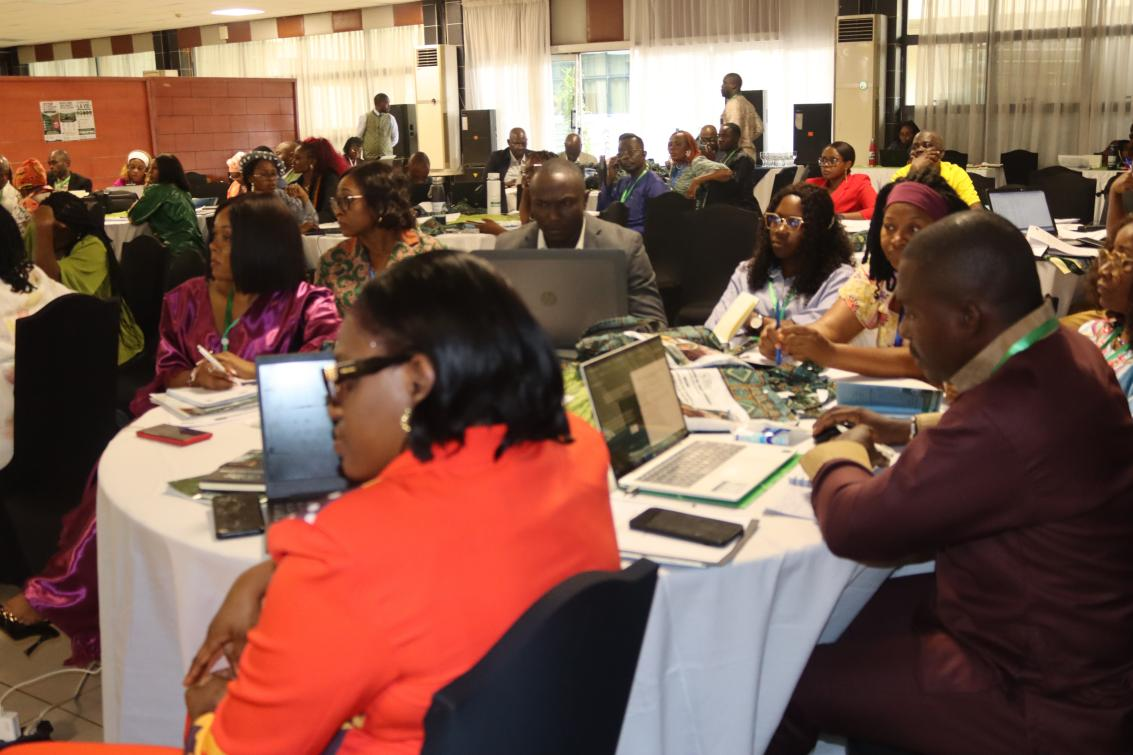
The turnout at the GDA organised conference to see how a concertation framework could be established to encourage reflections on how to find solutions to halt forest coversion in the Congo Basin cannot be underestimated. With participants coming from diverse sectors and different countries to review the dynamics surrounding forest conversion, the rendezvous was evidently a demonstration of the seriousness of the problem and the urgency required in finding solutions.
Those attending were representing either civil society organizations, indigenous people and local communities , regional and national policy makers, technical and financial agencies, researchers and academic specialists on environmenal and forest management sciences. They came from five of the countries of the sub-region notably: The Democratic republic of Congo, the Republic of Congo, the Central African Republic, Gabon and Cameroon.
The two day sitting explored a number of thematics covering on subjects relating to the notion and situation of forest conversion in the sub-region; reinforcement of policies and coordination of action to halt forest loss within the Congo Basin; monitoring and accountability as well as financial and economic mecanisms in place to address forest conversion.
Papers were presented by the representatives on cross cutting issues touching on forest conversion like the alarming rate of the loss of primary forest in the Congo Basin between 2015 and 2025; Case studies highlighted by civil society representatives from the five countries attending; issues on the coherence and harmonization of policies and the contributions put in by partners like the European Union through its EUDR policies were highlighted.
All of these discussions were subsumed in a central question for reflection in the various working groups: What need be done to collectively halt or reduce to the lowest minimum the conversion of forests in the Congo Basin?
Significantly, if funding was to be the stumbling block to fast track the halting process, the conference participants would surely be happy to have received assurances made by a number of donors on their readiness and the availability of funding programmes and projects relating to forest conversion in the Congo Basin.
The spectacular mobilization and creation of the Environmental and Climate Justice Fund (ECJ) which was a landmark achievment of the COP 30 was also a welcome revelation during the sitting which now expands the financial resource base for funding in the Congo Basin and whose modus operandi is centred around funding directly the organizations in the field rather than channelling the funds through intermediary agencies.
The ECJ Fund now features amongst four other funders notably; Forest, People, Climate (FPP) pairing Climate and Land Use Alliance (CLUA), Green Grants Fund (GGF),Central African Forest Initiative (CAFI) and Reseau des populations Autochtones et Locale pour la Gestion Durable des Ecosystemes Forestieres pour l'Afrique Central (REPALEAC).
By the close of that conference, it was evidently clear from the intensity of discussions both at the level of working groups and at the plenary sessions that the stakeholders were determined to intensify action on the fight against forest convention in the Congo Basin through multisectorial collaboration and networking across the region.

Ne summo dictas pertinacia nam. Illum cetero vocent ei vim, case regione signiferumque vim te. Ex mea quem munere lobortis. Duis aute irure dolor in reprehenderit in voluptate velit esse cillum.
